

Main Kinds of Disposable Gloves and How to Choose the Right Gloves for Your Needs
Disposable gloves play a vital role in modern life. From food preparation and healthcare to cleaning, beauty services, and industrial work, disposable gloves help protect hands, maintain hygiene, and reduce cross-contamination. However, not all disposable gloves are the same. Each type is made from different materials, has different performance levels, and serves different purposes.
In this article, we will explore the main kinds of disposable gloves, including their materials, market price levels, and main uses, and then guide you on how to choose the most suitable disposable gloves for your specific needs.
Main Kinds of Disposable Gloves
Contents
1. HDPE Disposable Gloves (High-Density Polyethylene)
HDPE gloves are disposable gloves made from High-Density Polyethylene (HDPE), a lightweight plastic material known for its strength-to-weight ratio and moisture resistance. Unlike rubber or elastic gloves, HDPE gloves are typically loose-fitting and non-elastic. They are designed for short-term use where hygiene and hand separation are more important than durability or tactile sensitivity.
HDPE gloves are usually transparent, milky white or blue and often feature embossed surfaces to help improve grip during use.
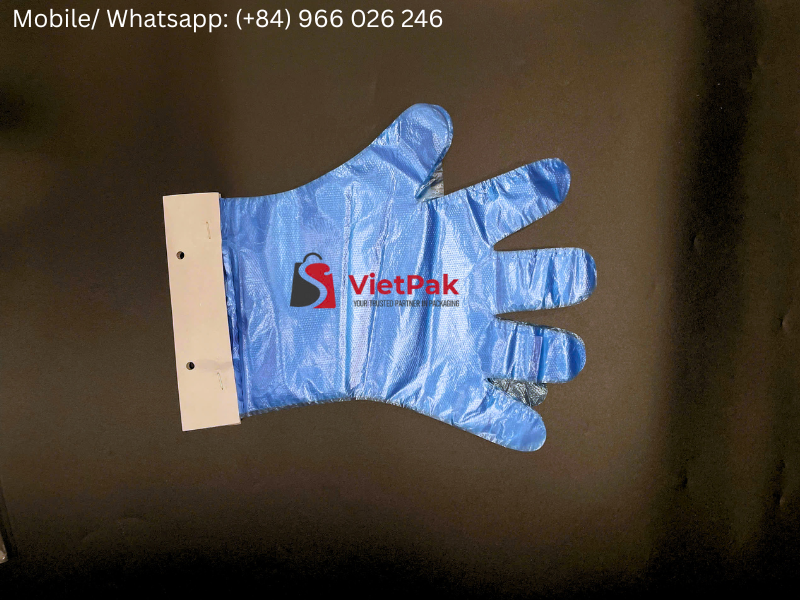
blockheader HDPE glove
Main Uses:
- Food handling and food service
- Supermarkets and convenience stores
- Bakeries, delis, and buffets
- Light cleaning tasks
HDPE disposable gloves are recognized as the lowest-cost disposable gloves on the market.
Because of their affordability, HDPE gloves are widely used in industries with high daily glove consumption.
2. LDPE Disposable Gloves (Low-Density Polyethylene)
LDPE gloves are disposable gloves made from Low-Density Polyethylene (LDPE), a plastic material known for its flexibility, softness, and smooth surface. Unlike HDPE gloves, LDPE gloves feel softer on the hand and provide better movement comfort. They are still non-elastic and loose-fitting but are more comfortable for longer wear in light-duty applications.
LDPE gloves are typically transparent or milky white and may have embossed or smooth surfaces depending on production requirements.
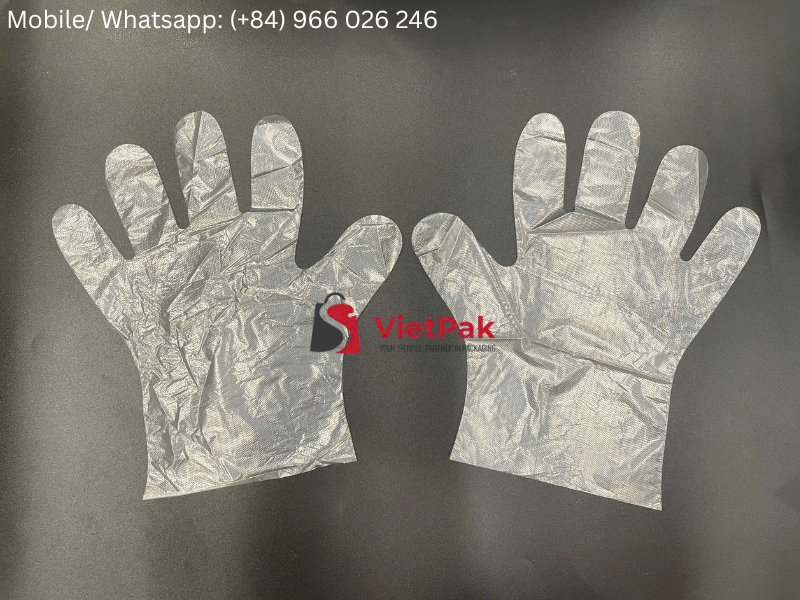
transparent LDPE glove
Main Uses:
- Food processing and food packaging
- Household cleaning
- Light industrial applications
- General hygiene tasks
LDPE gloves are slightly more expensive than HDPE gloves but still very cost-effective.
3. CPE Disposable Gloves (Cast Polyethylene)
CPE disposable gloves are made from Cast Polyethylene (CPE) using a cast film production process. This method creates gloves that are stronger, thicker, and more uniform than standard blown PE gloves. CPE gloves typically have a textured or embossed surface, which improves grip when handling wet or oily items. They are usually transparent, blue, or milky white and designed for single-use, short- to medium-duration tasks.
CPE gloves provide a good balance between durability, hygiene, and cost:
- Stronger than HDPE and LDPE gloves
- Textured surface for better grip
- Better tear and puncture resistance
- Latex-free and powder-free
- Waterproof and oil-resistant
- Food-contact safe
- Cost-effective for large-volume usage
Because of these advantages, CPE gloves are often selected when extra strength is required but nitrile gloves are unnecessary or too costly.
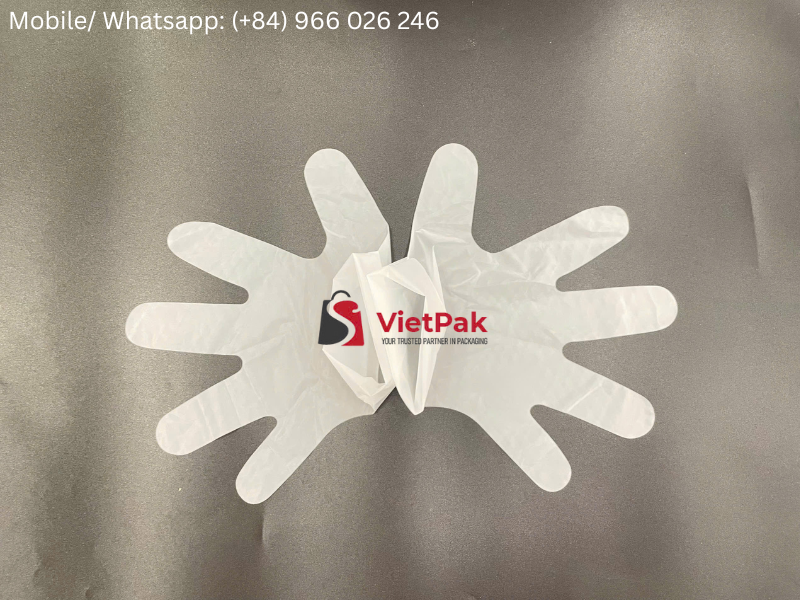
CPE gloves
Main Uses
- Food handling and food processing
- Catering and hospitality
- Beauty salons and hair salons
- Cleaning and sanitation
4. TPE Disposable Gloves (Thermoplastic Elastomer)
TPE disposable gloves are made from Thermoplastic Elastomer (TPE), a material that combines the easy processing of plastic with the elastic properties of rubber. Unlike HDPE, LDPE, or CPE gloves, TPE gloves provide good stretchability and hand fit, allowing better comfort during use. At the same time, they are latex-free, making them safe for users with latex allergies. TPE gloves are usually transparent, milky white, blue, or black and are commonly used for single-use, light- to medium-duty tasks.
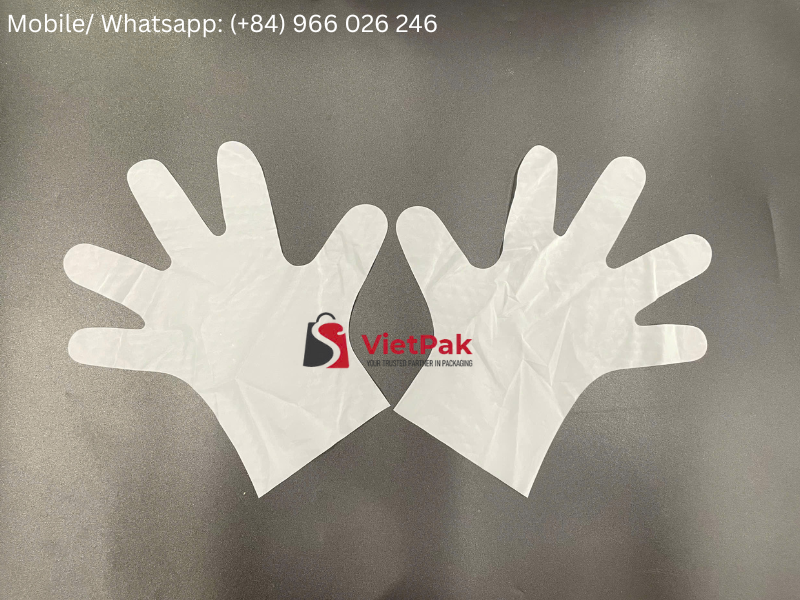
TPE gloves
Main Uses:
- Food preparation
- Restaurants and catering
- Beauty and personal care
- Light medical and hygiene tasks
Market Price Level:
TPE disposable gloves are positioned in the medium price range.
- More expensive than HDPE, LDPE, and CPE gloves
- Cheaper than nitrile gloves
- Cost varies based on thickness, size, color, and order volume
TPE gloves provide an excellent balance between comfort, performance, and cost efficiency.
5. Vinyl Disposable Gloves (PVC Gloves)
Vinyl disposable gloves are a widely used solution for hygiene and basic hand protection across many industries. Known for their affordability and latex-free composition, vinyl gloves are commonly chosen for low-risk tasks where comfort and frequent glove changes are required. They offer a practical balance between cost and usability, making them popular in food service, cleaning, and general service applications. Vinyl disposable gloves are made from Polyvinyl Chloride (PVC) combined with plasticizers to create a flexible glove material. Unlike latex or nitrile gloves, vinyl gloves do not contain natural rubber, making them latex-free and allergy-friendly. Vinyl gloves are typically smooth-surfaced, non-elastic, and available in transparent, white, or light blue colors. They are designed for short-term, single-use applications where heavy protection is not required.
Vinyl disposable gloves are suitable for low-risk environments where chemical resistance and puncture protection are not critical.
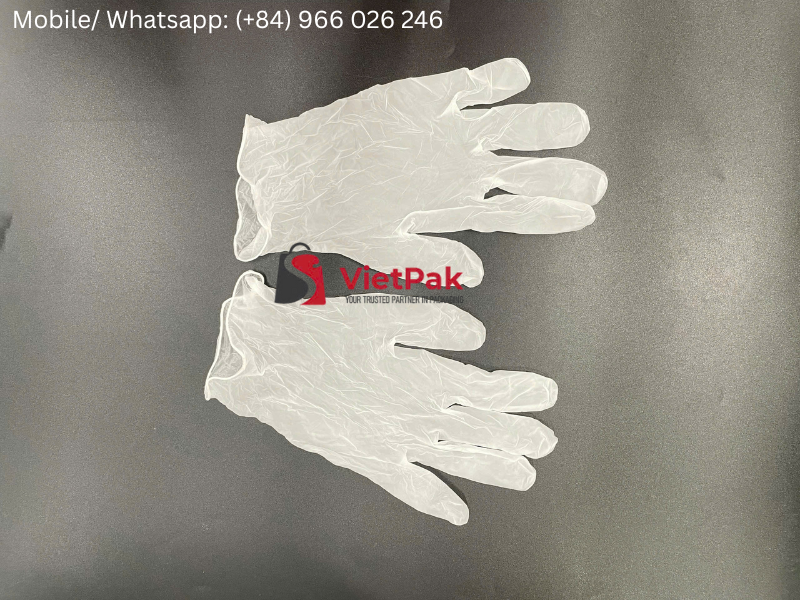
vinyl disposable glove
Main Uses:
- Food service
- Cleaning and janitorial work
- Beauty and cosmetic applications
- Low-risk medical tasks
Low to medium. Vinyl gloves are generally cheaper than nitrile gloves but more expensive than PE gloves.
6. Nitrile Disposable Gloves
Nitrile disposable gloves are made from synthetic rubber (nitrile butadiene rubber – NBR). Unlike natural rubber latex, nitrile does not contain latex proteins, making these gloves safe for users with latex allergies. Nitrile gloves provide a close hand fit, good elasticity, and superior resistance to punctures, chemicals, and oils. They are typically available in blue, black, white, or purple and are widely used in professional settings where higher protection is required.
Nitrile gloves offer excellent puncture resistance, chemical resistance, and durability. They are latex-free and suitable for users with latex allergies.
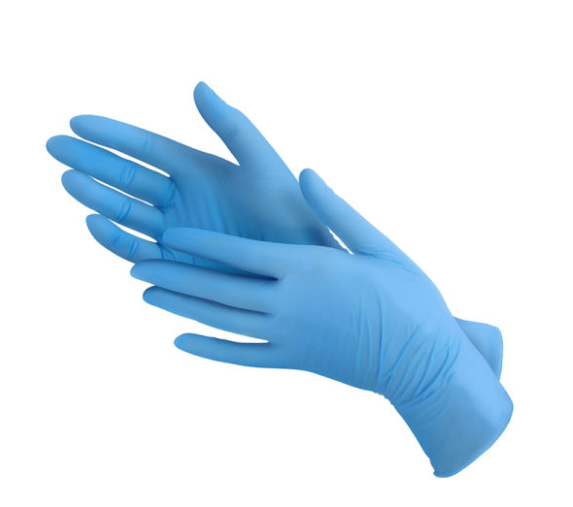
blue nitrile gloves
Main Uses:
- Medical and healthcare
- Laboratories
- Automotive and mechanical work
- Chemical handling
- Industrial applications
Medium to high. Nitrile gloves are more expensive due to their superior performance.
7. Latex Disposable Gloves
Latex gloves have long been used in medical and professional settings. They are made from natural rubber latex. These gloves provide excellent elasticity, comfort, and tactile sensitivity. However, they may cause allergic reactions for some users.
Main Uses:
- Medical examinations
- Dental clinics
- Laboratories
- Precision tasks
Latex gloves are generally cheaper than nitrile gloves but more expensive than vinyl or plastic gloves.
How to Choose Suitable Disposable Gloves for Your Needs
Choosing the right disposable gloves depends on several important factors:
1. Intended Use and Risk Level
For high-risk environments such as healthcare, laboratories, or chemical handling, nitrile or latex gloves are the best choices.
For food service, cleaning, or general hygiene, HDPE, LDPE, CPE, or TPE gloves are usually sufficient and more economical.
2. Comfort and Fit
If tasks require fine motor skills or long wearing time, choose gloves with good elasticity such as nitrile, latex, or TPE gloves.
For short-term tasks, loose-fitting PE gloves are practical and convenient.
3. Allergy Considerations
If latex allergy is a concern, always choose latex-free options such as nitrile, vinyl, TPE, or PE gloves.
4. Budget and Usage Volume
For high-volume, low-risk applications, HDPE and CPE gloves provide the best cost efficiency.
For professional use where safety and durability matter, investing in nitrile gloves is worthwhile.
Conclusion
Disposable gloves are available in many materials, including HDPE, LDPE, CPE, TPE, vinyl, nitrile, and latex, each designed for different applications, protection levels, and budgets. Understanding the differences helps businesses and individuals choose the most suitable gloves for hygiene, safety, and efficiency.
Vietpak is a leading manufacturer of HDPE, CPE, and TPE disposable gloves, supplying reliable, cost-effective, and food-safe glove solutions for global markets. With advanced production capabilities and strict quality control, Vietpak supports customers in food service, hygiene, and light industrial sectors worldwide.
Read also: Premier HDPE Plastic Bag Supplier in Vietnam
PRODUCT CATEGORIES
- BAGASSE PACKAGING
- ECO-FRIENDLY BAGS
- GARBAGE PLASTIC BAGS
- INDUSTRIAL PACKAGING
- MAILING BAG
- PLASTIC FOOD PACKAGING
- PLASTIC SHOPPING BAGS
- POLY APRON
- ZIPPER PLASTIC BAG
Lastest products

LAST NEWS
-
What Is an LDPE Ice Bag?
March 5, 2026
Related news

LEADING MANUFACTURER
We are a premier plastic bag manufacturer based in Vietnam. Our dedicated team excels in crafting customized packaging solutions to precisely meet the needs of all customers
QUALITY CONTROL
We have a strict quality control system. Our bags are inspected before production, during production, and prior to loading into containers. Our priority is to minimize every defective goods before shipping to our customers
AMAZING SERVICE
Our enthusiastic customer service team always strives to respond to your emails as promptly as possible. We take pride in our ability to consistently deliver high-quality products on time, every time.