

5 Key Features of Poly Plastic Bags on Roll You Should Know
When people talk about plastic bags on roll, they often assume all products are essentially the same. After all, every bag is designed to hold groceries, vegetables, food products, or retail items. In reality, however, there is a significant difference between a bag that simply meets the minimum requirement and one that performs consistently in everyday use. The choice of material, film thickness, production technology, and even the way the bags are wound into rolls can all influence the user experience.
For supermarkets, fresh produce distributors, food processors, and packaging wholesalers, these differences become even more important. A bag that tears too easily slows down packing lines, increases material waste, and ultimately costs more than a slightly better product. On the other hand, selecting a bag that is unnecessarily thick may provide extra strength but also increases packaging costs without delivering any real benefit.
This is why professional buyers rarely choose poly plastic bags on roll based on price alone. Instead, they evaluate the material, the intended application, and the long-term value the bags can provide. Understanding these factors makes it much easier to determine whether HDPE poly bags on roll or LDPE poly bags on roll are the better solution for a particular business.
At Vietpak, we have supplied plastic packaging to customers across Europe, North America, Australia, Japan and many other international markets for years. One of the questions we receive most frequently is surprisingly simple: “Should I choose HDPE or LDPE bags on roll?” The answer depends less on which material is “better” and more on how the bags will actually be used.
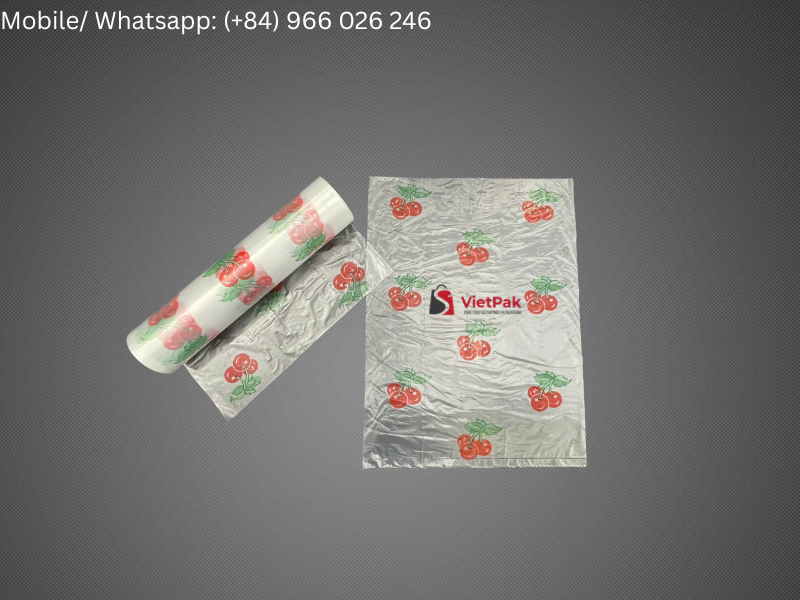
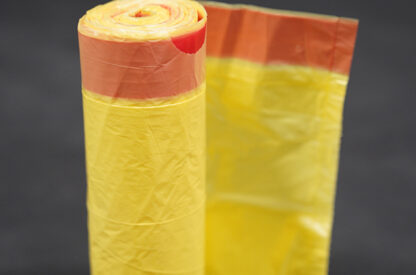
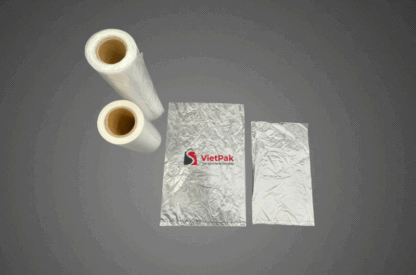
HDPE produce bag on roll
HDPE and LDPE: Similar Materials with Different Strengths
Contents
- HDPE and LDPE: Similar Materials with Different Strengths
- 1. The Right Material Can Reduce Packaging Costs More Than You Think
- 2. Thickness Is Important—But It Doesn’t Tell the Whole Story
- 3. Roll Configuration Matters More Than Most Buyers Expect
- 4. Choosing the Right Bag Depends on the Products You Pack
- 5. A Reliable Manufacturer Adds Value Beyond Competitive Pricing
- Why Buyers Around the World Choose Vietpak
- Final Thoughts
Both HDPE (High Density Polyethylene) and LDPE (Low Density Polyethylene) belong to the polyethylene family, which is why they are commonly referred to as poly plastic bags. Although they share the same basic raw material, the manufacturing process gives each type of polyethylene its own unique characteristics.
HDPE produces a film with a higher density, making the bag lightweight yet surprisingly strong for its thickness. It has a crisp texture, offers excellent tensile strength, and is widely recognized as the most economical choice for high-volume applications. This is why HDPE vegetable bags on roll are commonly found in supermarkets, grocery chains, and fresh produce sections where thousands of bags are used every day. Typical HDPE roll bags range from 7 to 30 microns and are available with either paper cores or coreless rolls, depending on the customer’s dispensing system.
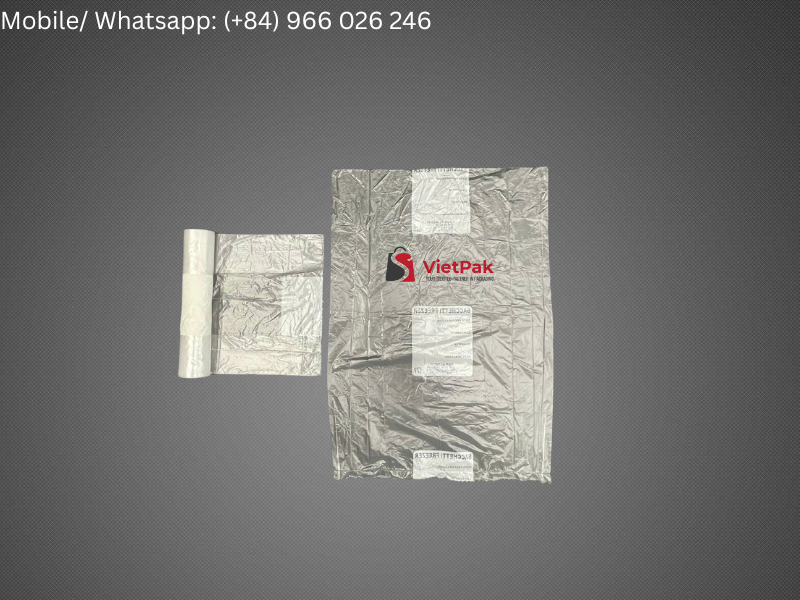
7 micron HDPE produce freezer bag on roll
LDPE, by comparison, creates a softer and more flexible film. Rather than resisting force with rigidity, LDPE stretches under load, making it more resistant to tearing when carrying heavier or irregularly shaped products. Standard LDPE poly bags on roll are usually manufactured between 20 and 40 microns, again with both core and coreless roll options available. Although LDPE bags generally cost more than HDPE bags, many buyers consider the additional investment worthwhile for applications where durability and presentation matter.
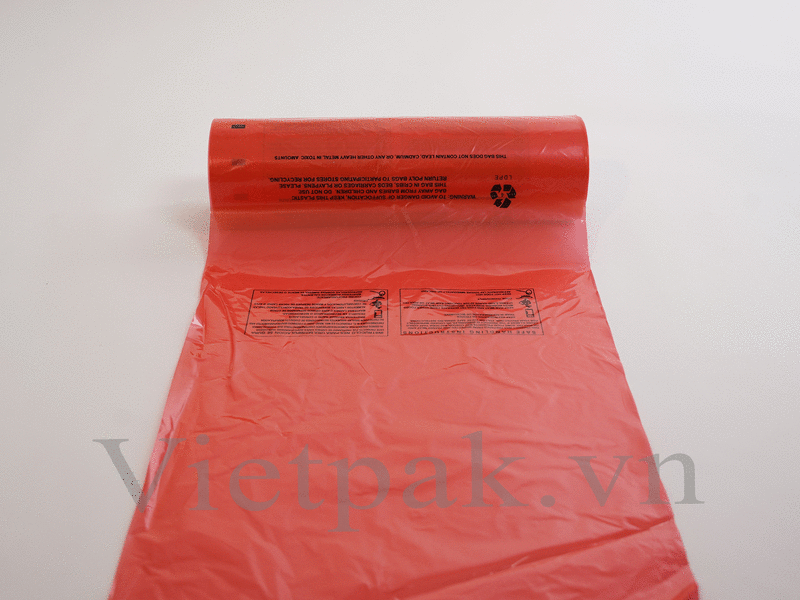
LDPE produce bag on roll
Understanding these differences is the foundation for selecting the right packaging. The remaining features discussed below explain why experienced buyers look beyond material alone when sourcing plastic bags on roll.
1. The Right Material Can Reduce Packaging Costs More Than You Think
Many buyers focus on the unit price of a plastic bag without considering the overall cost of using it. In reality, selecting the correct material often has a much greater impact on operating expenses than negotiating a fraction of a cent from the purchase price.
Take a supermarket produce section as an example. Customers typically use bags to pack lightweight items such as tomatoes, apples, lettuce, cucumbers, or herbs. These products do not require exceptional stretchability, but they do require bags that open easily, resist splitting during normal handling, and remain economical because thousands of bags are consumed each week. In this situation, HDPE bags are usually the most efficient choice. Their high strength-to-weight ratio allows manufacturers to produce thin films that perform reliably while keeping material consumption low.
The situation changes when the bags are used for frozen seafood, meat products, or bulk groceries. These products often have sharp edges, higher weight, or irregular shapes that place more stress on the film. An LDPE bag, with its greater elasticity, can stretch before tearing, reducing the risk of product damage and improving the customer’s experience.
Choosing between HDPE and LDPE should therefore never be viewed simply as selecting the cheaper or more expensive option. The objective is to match the material to the application. When this balance is achieved, businesses reduce waste, improve operational efficiency, and often lower their total packaging costs over time.
2. Thickness Is Important—But It Doesn’t Tell the Whole Story
One of the most common questions buyers ask is, “What thickness should I choose?” While micron thickness is certainly an important specification, it should never be considered in isolation.
A well-manufactured 10-micron HDPE bag produced from high-quality resin can often outperform a poorly manufactured 15-micron bag made with inconsistent raw materials. Film strength depends not only on thickness but also on resin quality, extrusion technology, cooling control, and production consistency. This is one reason why experienced importers pay close attention to the reputation of the manufacturer rather than comparing specifications on paper alone.
For HDPE poly bags on roll, thicknesses typically range from 7 to 30 microns, covering everything from lightweight produce bags to stronger grocery applications. LDPE bags generally start around 20 microns and can reach 40 microns or more, offering additional flexibility for heavier products.
Rather than automatically choosing the thickest bag available, businesses should identify the minimum thickness that still delivers reliable performance. Reducing just one or two microns across a large annual purchasing volume can generate meaningful cost savings, provided the quality of the film remains consistent. This is where an experienced manufacturer becomes valuable—not simply producing bags to a requested specification, but recommending the most cost-effective solution based on the customer’s actual application.
3. Roll Configuration Matters More Than Most Buyers Expect
When buyers compare quotations for poly plastic bags on roll, they naturally pay attention to the material, thickness, and price. However, another detail that is often overlooked is the roll configuration itself. This seemingly small factor can have a noticeable impact on packaging efficiency, especially for businesses that consume thousands of bags every day.
At first glance, a roll with a paper core and a coreless roll perform the same function—they both allow bags to be dispensed quickly. The difference becomes apparent in daily operations.
Paper-core rolls are widely used because they fit most standard dispensers found in supermarkets and food processing facilities. The roll remains stable during use, making it easier for customers or staff to tear off individual bags. This is why many large retail chains continue to specify paper-core rolls as part of their purchasing requirements.
Coreless rolls, on the other hand, have become increasingly popular over the past few years. Without a paper tube in the centre, each roll occupies less storage space, reduces packaging waste, and lowers transportation costs. For distributors importing large container quantities, this can translate into better container utilization and lower logistics costs per roll.
Another aspect that deserves attention is the perforation quality. A properly manufactured plastic bag on roll should separate cleanly without requiring excessive force. If the perforation is too weak, bags may detach prematurely during transportation. If it is too strong, customers often struggle to tear off a single bag, slowing down the packing process and creating unnecessary frustration.
Although these details may seem minor, they directly affect the end user’s experience. For supermarkets, convenience is part of customer service. For factories, it influences production efficiency. This is why experienced buyers evaluate the overall design of the roll rather than looking only at the bag itself.
4. Choosing the Right Bag Depends on the Products You Pack
One mistake that many new buyers make is searching for the “best” poly plastic bag on roll. In reality, there is no universal solution. The best bag is simply the one that matches the products being packed.
Fresh produce provides a good example. Vegetables and fruits are generally lightweight, yet they are packed in very high volumes. In this case, businesses usually prioritize efficiency and cost control over extreme durability. A properly manufactured HDPE vegetable bag on roll offers more than enough strength while keeping material consumption low. This explains why HDPE continues to dominate supermarket produce departments around the world.
The situation changes when the products become heavier or have irregular shapes. Frozen seafood, meat, poultry, baked goods, or industrial components place much greater stress on the bag. Under these conditions, LDPE demonstrates its biggest advantage. Instead of tearing immediately when stretched, the material expands under load, allowing it to carry heavier products more safely.
Transparency may also influence material selection. LDPE typically produces a clearer, glossier film that gives packaged products a more premium appearance. Businesses selling higher-value food products often prefer this presentation because customers can easily inspect the contents while the packaging still looks clean and attractive.
This is one reason why professional packaging suppliers rarely recommend the same specification to every customer. Instead, they ask practical questions about product weight, packing methods, transportation conditions, storage temperatures, and expected annual consumption before suggesting the most suitable solution.
Ultimately, selecting the correct bag is not about buying the strongest film available. It is about purchasing exactly the level of performance required—nothing less, but also nothing more than necessary.
5. A Reliable Manufacturer Adds Value Beyond Competitive Pricing
Global resin prices have experienced significant fluctuations over the past two years. Supply chain disruptions, geopolitical tensions, and changing demand have all contributed to higher polyethylene costs, making price stability one of the biggest concerns for packaging buyers.
Fortunately, market conditions have gradually improved in recent months. Although raw material prices remain above historical averages, they have shown signs of stabilizing compared with the sharp increases seen earlier. For importers planning their purchasing strategy, this creates a more favourable environment to negotiate long-term supply agreements and secure stable pricing.
However, experienced buyers understand that selecting a supplier should never be based solely on today’s quotation. The lowest-priced bag may become the most expensive option if inconsistent quality leads to production delays, damaged products, or customer complaints.
A reliable manufacturer contributes value in many ways. Consistent film thickness ensures every shipment performs the same as the previous one. Stable raw material sourcing reduces unnecessary quality variation. Modern extrusion and converting equipment improves seal strength and roll consistency. Thorough quality inspection minimizes defects before products leave the factory. Responsive communication also allows buyers to solve problems quickly and keep projects moving on schedule.
These factors are difficult to measure on a quotation sheet, yet they often determine whether a supplier becomes a long-term partner or merely a one-time vendor.
Why Buyers Around the World Choose Vietpak
As a Vietnamese manufacturer specializing in flexible plastic packaging, Vietpak supplies HDPE poly bags on roll and LDPE poly bags on roll to customers across a wide range of industries, from supermarket chains and food processors to agricultural exporters and packaging distributors.
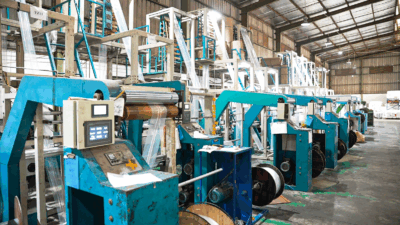
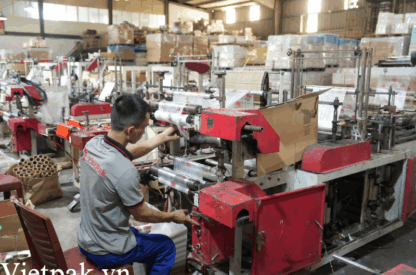
Vietpak plastic bag factory
Rather than offering a single standard product, we work closely with each customer to understand how the bags will actually be used. Recommendations are based on practical considerations such as product weight, required film strength, dispensing systems, storage conditions, and budget targets. This approach helps customers avoid unnecessary material costs while ensuring the bags perform reliably throughout their operations.
Our manufacturing capabilities include both paper-core and coreless rolls, with HDPE thicknesses ranging from 7 to 30 microns and LDPE from 20 to 40 microns. We also provide custom sizes, roll lengths, packaging options, and private-label printing for customers building their own brands in international markets.
Quality remains a priority throughout production. Every stage—from raw material selection to extrusion, bag conversion, perforation, sealing, and final inspection—is carefully monitored to maintain consistency from one shipment to the next. For buyers importing full container loads, consistency is often just as valuable as competitive pricing.
As global sourcing continues to shift toward Southeast Asia, Vietnam has established itself as a dependable manufacturing base for plastic packaging. Competitive labour costs, improving production technology, and extensive export experience enable Vietnamese manufacturers to deliver excellent value without compromising quality. Vietpak is proud to be part of that growing reputation, supplying packaging solutions that meet the expectations of customers in Europe, North America, Australia, Japan, and many other international markets.
Final Thoughts
Although poly plastic bags on roll may appear to be simple everyday products, choosing the right specification requires a careful understanding of material performance, production quality, and practical application. HDPE and LDPE each have their own strengths, and selecting the right one can improve operational efficiency while reducing unnecessary packaging costs.
For businesses packaging fresh fruit and vegetables, HDPE vegetable bags on roll remain one of the most economical and efficient solutions available. Where greater flexibility, heavier load capacity, or a more premium appearance is required, LDPE offers clear advantages despite its higher material cost.
The most successful purchasing decisions are rarely based on price alone. They come from working with a manufacturer that understands your products, recommends the most appropriate specification, and delivers consistent quality shipment after shipment.
If you are looking for a trusted poly plastic bags on roll manufacturer in Vietnam, Vietpak combines competitive pricing, flexible manufacturing capabilities, and years of export experience to help your business source packaging with confidence. Whether your requirement is a standard produce bag on roll or a fully customized packaging solution, our team is ready to support your next project with products built for long-term performance.
Read also: 2026 Reusable Shopping Bag Prices: A Practical Guide for Buyers and Importers
PRODUCT CATEGORIES
- BAGASSE PACKAGING
- ECO-FRIENDLY BAGS
- GARBAGE PLASTIC BAGS
- INDUSTRIAL PACKAGING
- MAILING BAG
- PLASTIC FOOD PACKAGING
- PLASTIC SHOPPING BAGS
- POLY APRON
- ZIPPER PLASTIC BAG
Lastest products


LAST NEWS
Related news
LEADING MANUFACTURER
We are a premier plastic bag manufacturer based in Vietnam. Our dedicated team excels in crafting customized packaging solutions to precisely meet the needs of all customers
QUALITY CONTROL
We have a strict quality control system. Our bags are inspected before production, during production, and prior to loading into containers. Our priority is to minimize every defective goods before shipping to our customers
AMAZING SERVICE
Our enthusiastic customer service team always strives to respond to your emails as promptly as possible. We take pride in our ability to consistently deliver high-quality products on time, every time.